1. The Rise of Dreamscape-Style AI Photo Prompts in 2024
As we move deeper into 2024, AI-generated photography continues to transform the creative landscape. One of the most captivating trends this year is the surge of dreamscape-style photo prompts—visual concepts that blend surreal beauty, cinematic lighting, and emotionally rich storytelling. Creators are no longer limited to simple scene descriptions; instead, they craft prompts that feel poetic, immersive, and deeply atmospheric.
Among these rising styles, moonlit dreamscapes have gained extraordinary popularity. With AI models becoming more nuanced and context-aware, users can now generate hyper-detailed images where every element—light, shadow, motion, and texture—aligns perfectly to evoke emotion. Whether it’s for digital art, fantasy storytelling, branding, or aesthetic content creation, glowing-moon prompts are shaping the visual direction of 2024.
The trend also highlights a growing shift toward multi-modal creativity, where artists combine text-based prompts with reference images or mood boards to produce mesmerizing dream-like visuals. In a world where imagination meets advanced AI engineering, moonlit dreamscape prompts are redefining what’s visually possible.
2. How to Craft Effective Dreamscape Prompts for Google Gemini
Creating a powerful dreamscape prompt—especially one centered on a luminous moonlit scene—requires clarity, purpose, and artistic direction. When writing prompts for Google Gemini, the key is to be specific yet creative, allowing the AI to fully understand the atmosphere you’re aiming to evoke.
Start by defining the core emotion of the scene. Is it peaceful? Mysterious? Romantic? Haunting? This emotional anchor helps Gemini generate imagery aligned with your intention. Next, include visual details such as lighting style, environment, mood, character presence, color temperature, and artistic influence.
For example:
- Instead of: “A man under the moon.”
Use: “A lone traveler standing beneath a glowing full moon, soft silver light cascading over misty hills, ethereal atmosphere, cinematic shadows.”
Experiment with prompt structures — whether descriptive, narrative, or instruction-based. Adding stylistic cues like “dreamlike,” “surreal realism,” “fantasy aesthetic,” “soft-focus,” or “hyper-detailed” can drastically improve the final output.
And finally, refine your prompt through iterations. Gemini responds beautifully when you adjust wording, layers, and mood step-by-step, transforming simple concepts into breathtaking, moonlit dreamscapes.
3. Enhancing Creativity with Moonlit Photo Prompts
One of the biggest breakthroughs of 2024 is the way AI elevates artistic imagination. Dreamscape-style prompts—especially those featuring glowing moons—open creative pathways that traditional tools struggle to achieve. They offer a blend of fantasy and realism that sparks inspiration for storytellers, digital artists, photographers, and creative marketers.
Google Gemini excels at interpreting atmospheric cues, allowing users to explore different moods: soft romantic moonlight, eerie silver silhouettes, enchanted forests, futuristic lunar scenes, or mystical night-time portraits. These prompts act as creative catalysts, helping artists overcome blocks and unlocking limitless visual concepts.
Whether you’re designing book covers, album art, cinematic scenes, or social media visuals, these moon-focused dreamscape prompts create a magical foundation. They enrich your creative workflow by merging human imagination with AI-driven vision—producing uniquely expressive, emotionally charged results.
4. Integrating Dreamscape Prompts into Professional Workflows
Dreamscape photo prompts, when powered by Google Gemini, are not just for artistic exploration—they’re becoming indispensable in professional environments. Businesses and creators now incorporate AI-generated moonlit imagery into:
Prompt:
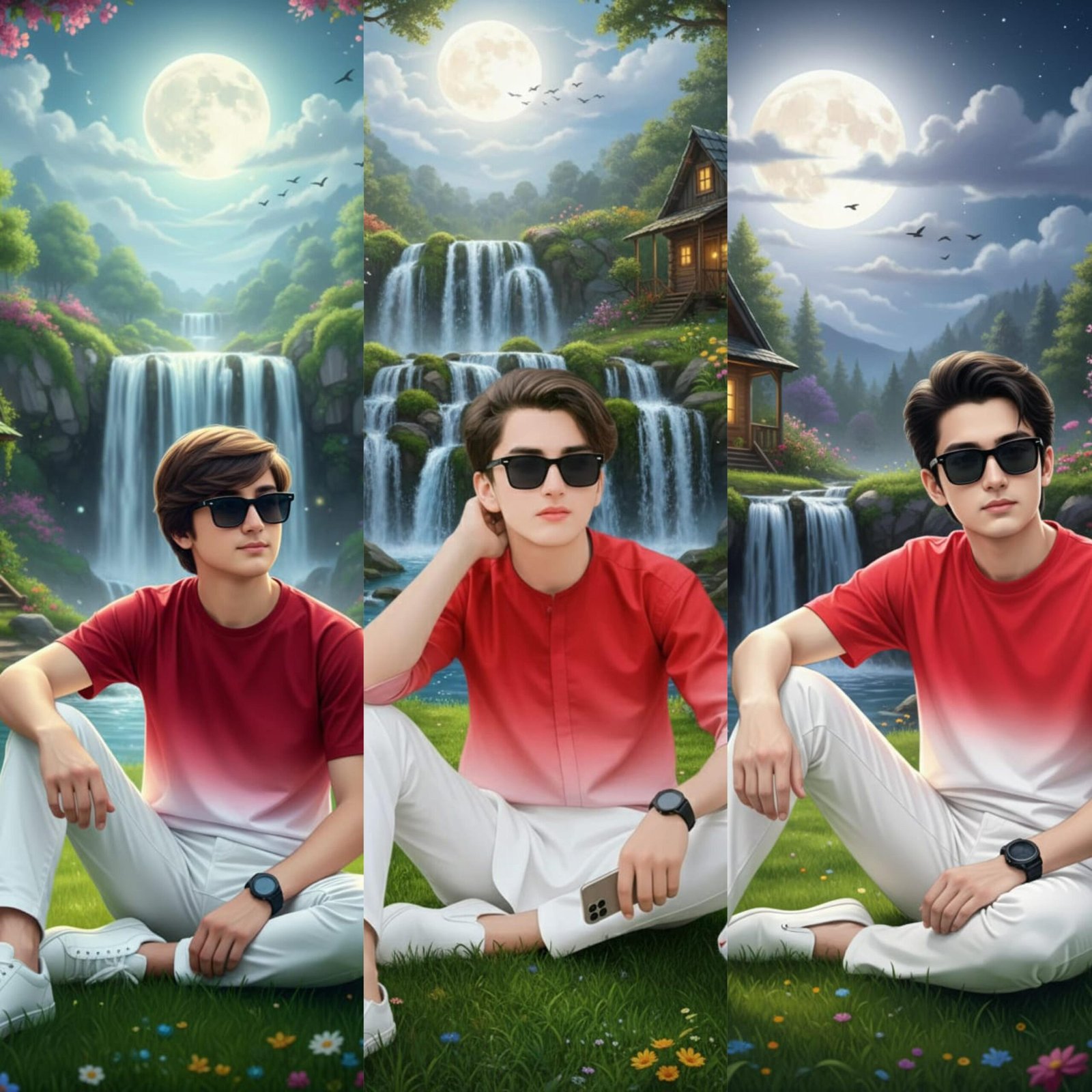
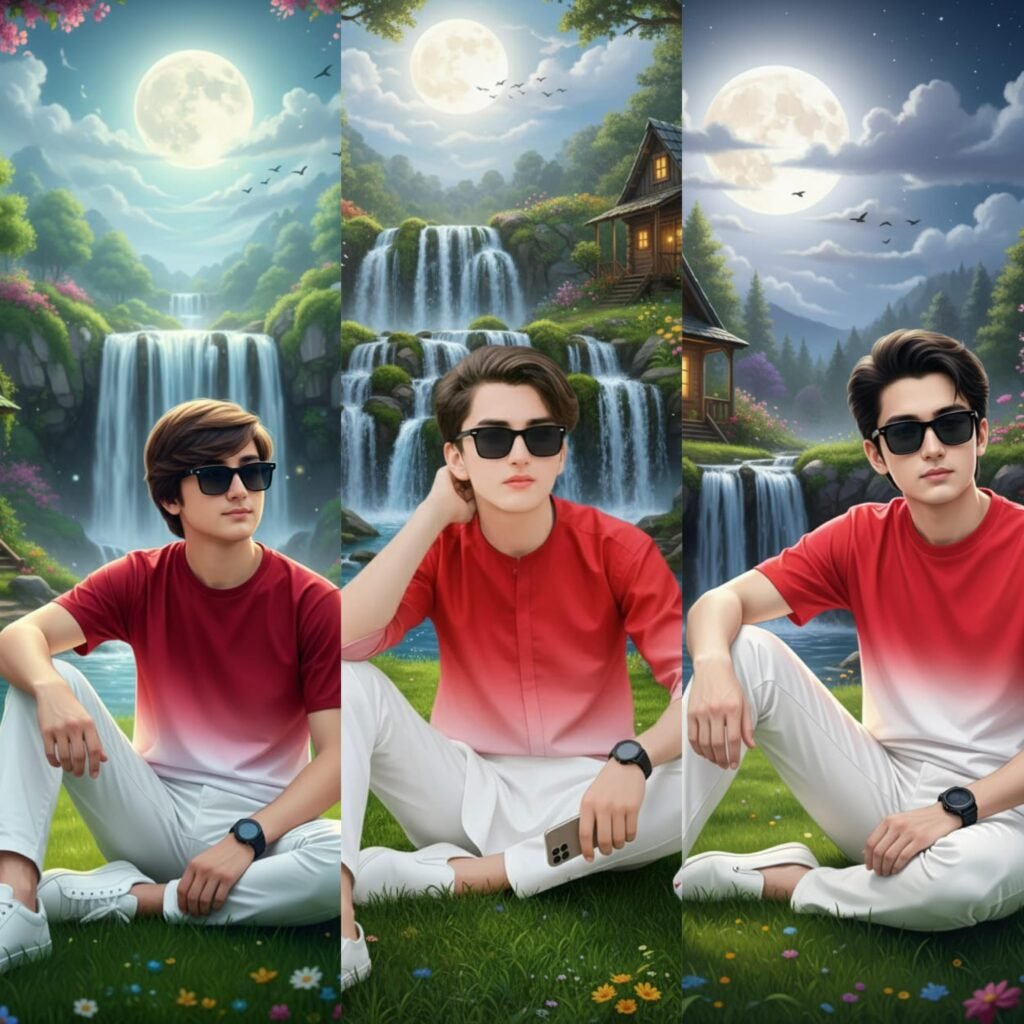
“A young man sitting on green grass in a beautiful fantasy-style garden. His pose is relaxed with one leg bent and one stretched forward, one arm resting on his knee. He is wearing a red-to-white gradient half-sleeve shirt and white trousers with white shoes. Black stylish sunglasses and a black wristwatch on his left hand.
Background features a glowing full moon, soft clouds, flying birds, a wooden cabin with warm yellow lights, a lush green landscape, colorful flowers, and a multi-layer waterfall behind him. Two cute animals (a small deer and a rabbit) are sitting near him.
Bright, vibrant color grading, ultra-detailed, high sharpness, smooth skin texture, soft lighting, dreamy fantasy aesthetic.
Keep the exact same face, same hairstyle, same expression, same pose.”
- branding and marketing campaigns
- product aesthetics
- digital storytelling
- motion graphics and animations
- editorial visuals
- immersive AR/VR scenes
Gemini’s ability to interpret mood, lighting, and depth makes these prompts extremely reliable for generating on-brand, high-quality visual assets. Agencies save hours of manual concept sketching, while designers receive instant inspiration that aligns with client direction.
Through seamless integration with design platforms and content pipelines, Gemini helps teams produce consistent, dreamy, moonlit visuals at scale—turning imagination into polished production-ready imagery.
5. Ethical Considerations When Using Advanced Dreamscape AI Tools
As AI-generated imagery becomes more photorealistic and immersive, ethical responsibility becomes crucial. When producing dreamscape visuals—especially those involving human-like figures or recognizable environments—creators should prioritize:
• Privacy Protection
Avoid generating images based on real individuals without consent. Even in dreamscape form, likeness issues must be handled carefully.
• Avoiding Bias
Ensure that characters, styles, and themes are inclusive and respectful. AI models can unintentionally replicate biases, so prompt responsibly.
Generate Image
• Transparency & Integrity
When using AI imagery commercially or editorially, clarify when visuals are AI-generated to prevent misinformation.
• Accountability in Creative Use
AI tools should enhance creativity, not replace ethical judgement. Creators must remain responsible for how their outputs are used, shared, and interpreted.
By approaching dreamlike, moonlit AI imagery with mindful consideration, we ensure that this technology enriches creativity without compromising trust or values.